Glucosamine for Dogs, Honestly
Glucosamine isn’t magic. It’s a building block. Here’s what it actually does, what it doesn’t do, and what to look for on the back of any chew label before you buy.
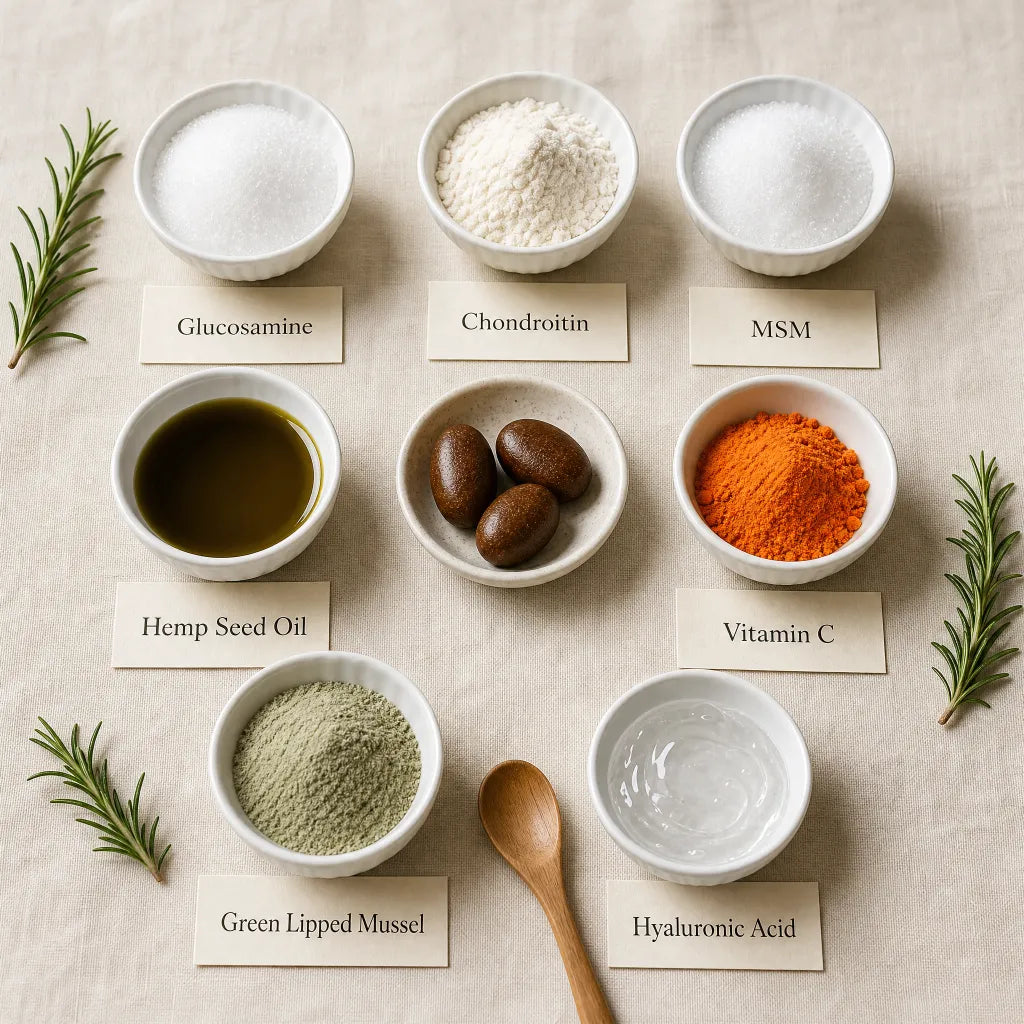
What glucosamine actually is
Glucosamine is an amino sugar the body uses to build cartilage. It’s naturally produced. As dogs age, production drops. Supplemental glucosamine gives the body more raw material for the same job.
There are two common forms on labels: glucosamine HCl and glucosamine sulfate. Both are real. HCl is more concentrated per milligram. Sulfate carries more sulfur, which the body also uses for connective tissue. We use HCl in TROT for dose efficiency.
What it doesn’t do
It isn’t a pain medication. It doesn’t reverse arthritis. It doesn’t replace a vet visit if your dog is yelping when she stands up. It’s a routine layer, not a fix.
How chondroitin and MSM fit in
Chondroitin sulfate is the cushion molecule in cartilage. MSM (methylsulfonylmethane) is sulfur in a form the body absorbs easily, and sulfur is the bond that holds connective tissue together. The three of them are the standard joint stack on any reputable label.
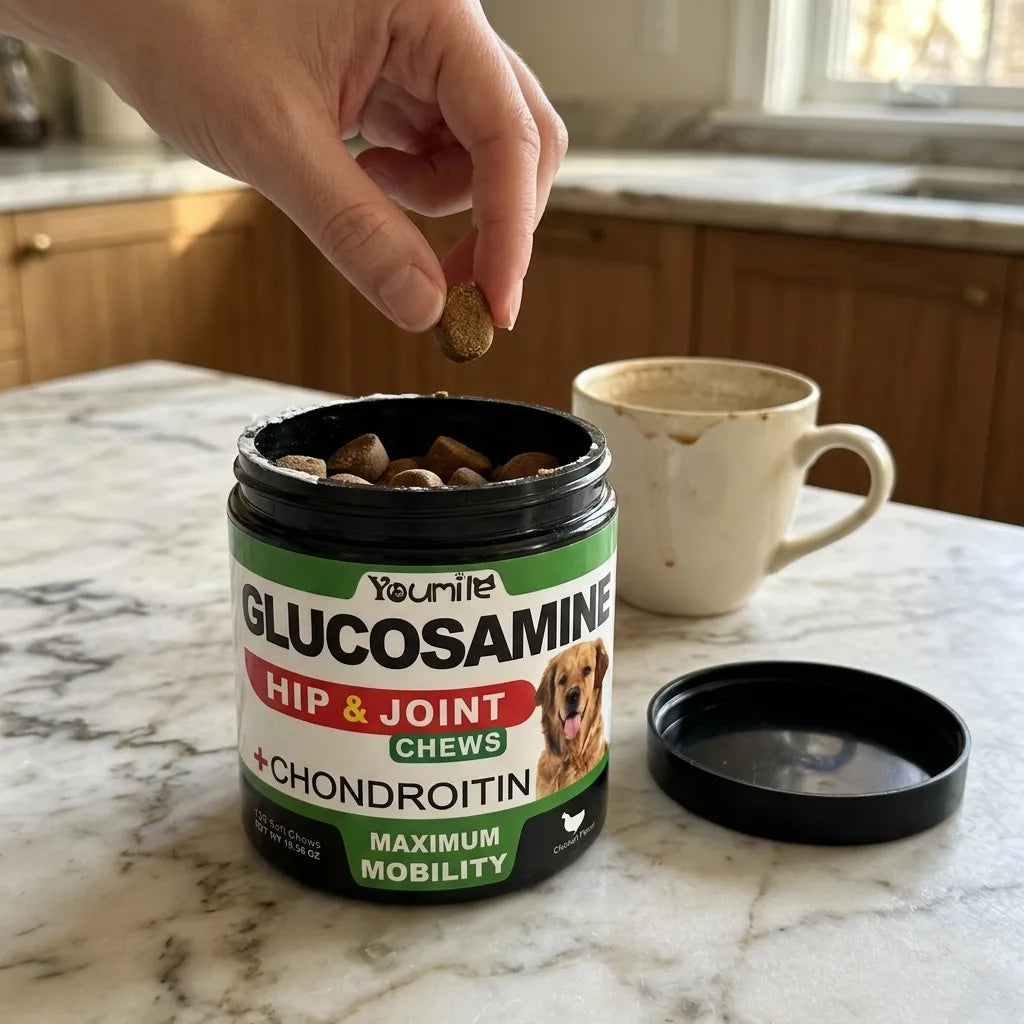
How much glucosamine does a dog need
Common label dosing: 20 mg of glucosamine per pound of dog body weight, daily. A 50 pound dog: ~1000 mg. TROT delivers 200 mg per chew, which is why the dosing on the tub scales with weight.
What we put in TROT, and why
- Glucosamine 500mg · joint cartilage support nutrient
- Chondroitin 300mg · pairs with glucosamine
- MSM 200mg · connective tissue sulfur
- Green Lipped Mussel 20mg · most studied joint nutrient in dogs
- Hyaluronic Acid 8mg · joint fluid
- Hemp Seed Oil 100mg · omega-rich daily fat
Read these next
Common questions
Glucosamine HCl vs sulfate, which is better?
Can I give my dog human glucosamine?
How long until I see anything?
What if my dog’s already on a vet med?
Bloom Azure · TROT · Built for the dogs whose joints are doing more than they used to.