
The Slow-Rise Morning, Decoded
She used to chase the squirrel. Now she watches it.
The slow rise is the first signal you notice. Then the stair hesitation. Then she stops jumping on the couch.
This is what those signals mean and the daily routine that supports them.
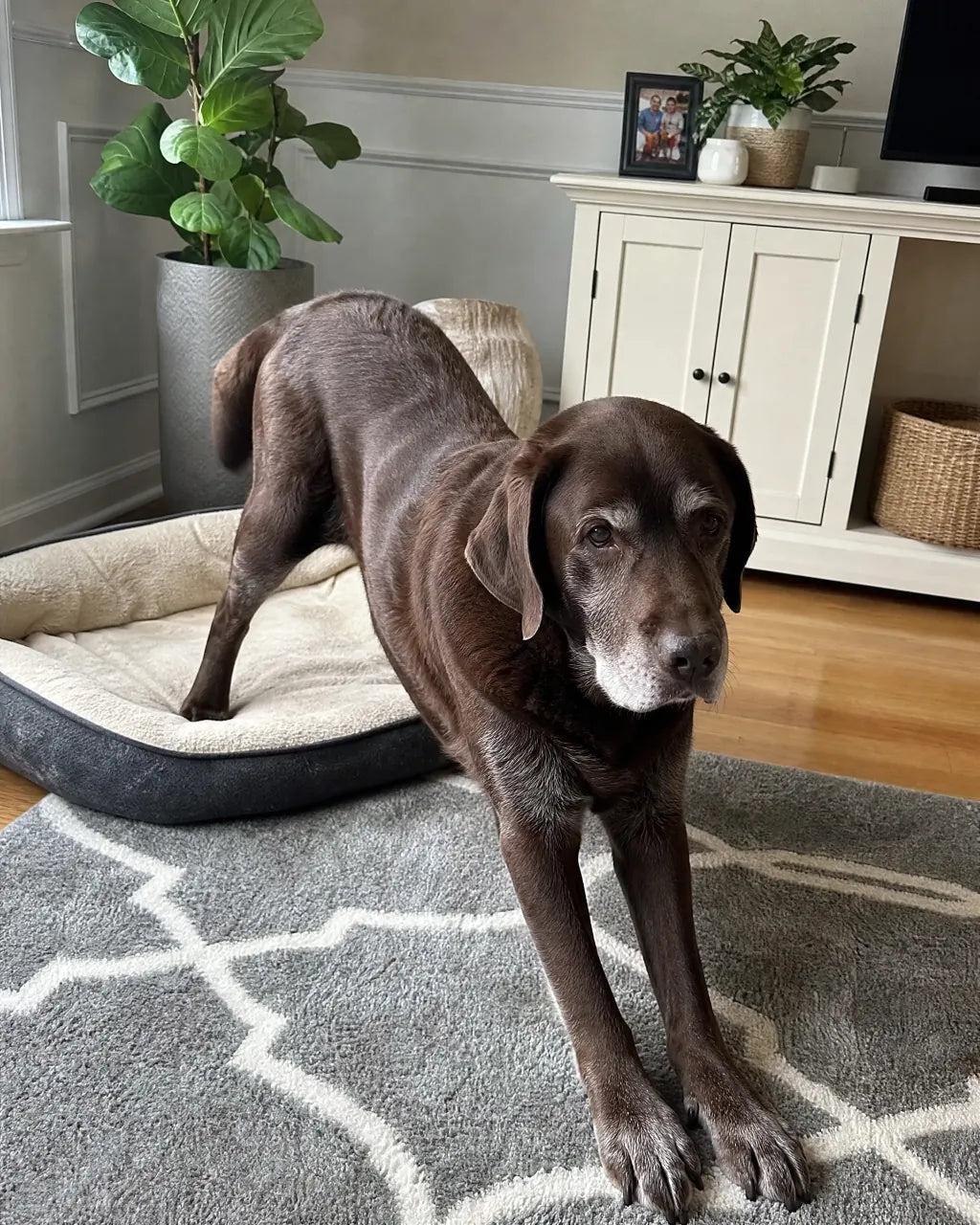
What you are watching
The 30-second stand. The leg stretch before the walk. The shake-off that takes longer than it used to.
You are watching joint fluid that took a longer break overnight. The morning lubricant is back, but it takes a few minutes for the body to remember.
This is not "old age." This is daily mechanics.
The two-minute morning warm-up
Before the walk:
- Hand massage on the rear hips (30 seconds each side)
- Slow walk to the water bowl (let her stretch as she goes)
- Daily joint chew with breakfast
- 10 minutes before the leash comes out
Owners who run this routine report fewer stair hesitations within 4 to 6 weeks.
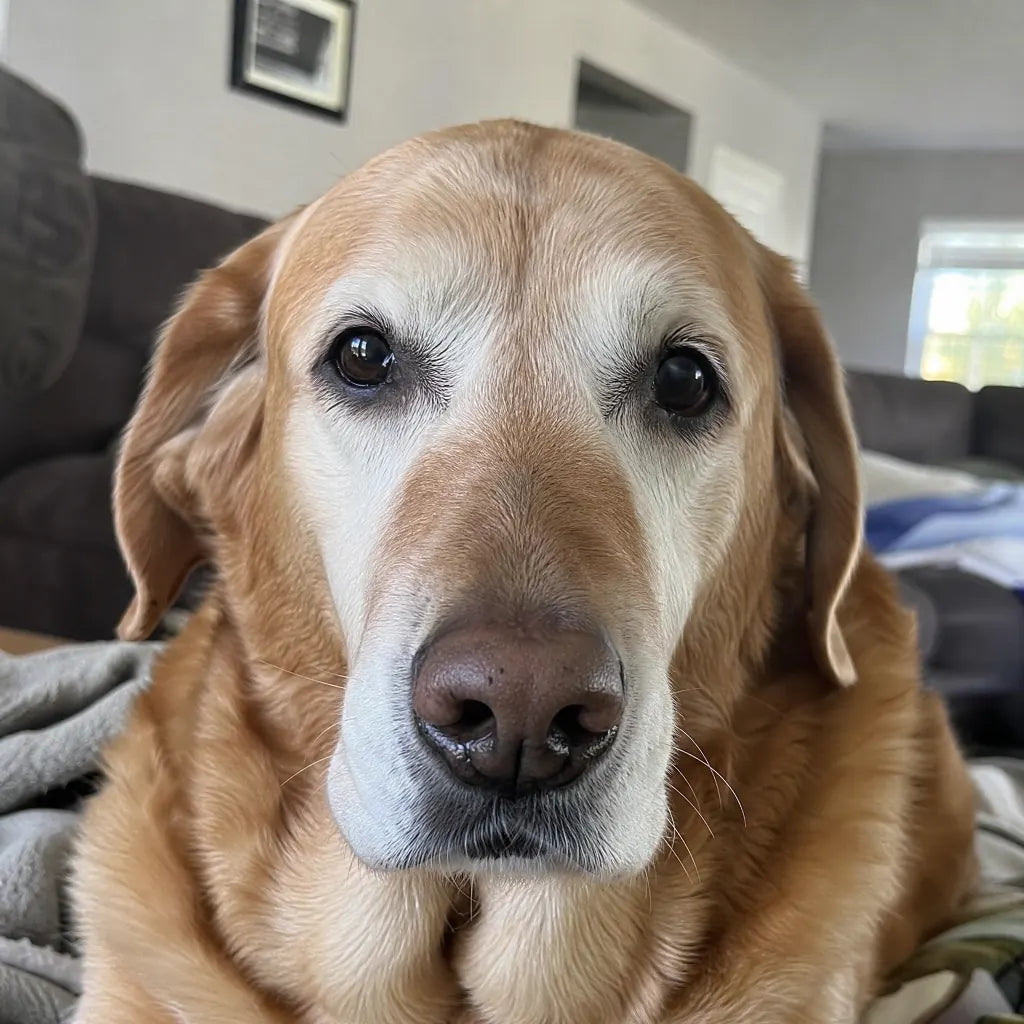
Bed surface, room temp, floor traction
- The bed: orthopedic memory foam, not a puff. Joints sink, edges support.
- Room temp: 68-72F overnight. Cold stiffens joints; warm helps fluid stay loose.
- Floor traction: runners on hardwood paths to the water bowl, the door, and the bed. Toe Grips on her nails for tile.
Three small fixes that compound.
Where a daily chew fits
Glucosamine and chondroitin support the body's joint maintenance. MSM brings sulfur for connective tissue. Hyaluronic acid sits in the joint fluid. Turmeric supports comfort. Passion flower for the calm walk.
TROT puts all six in one chew. Two minutes a morning. Same shelf as the coffee.
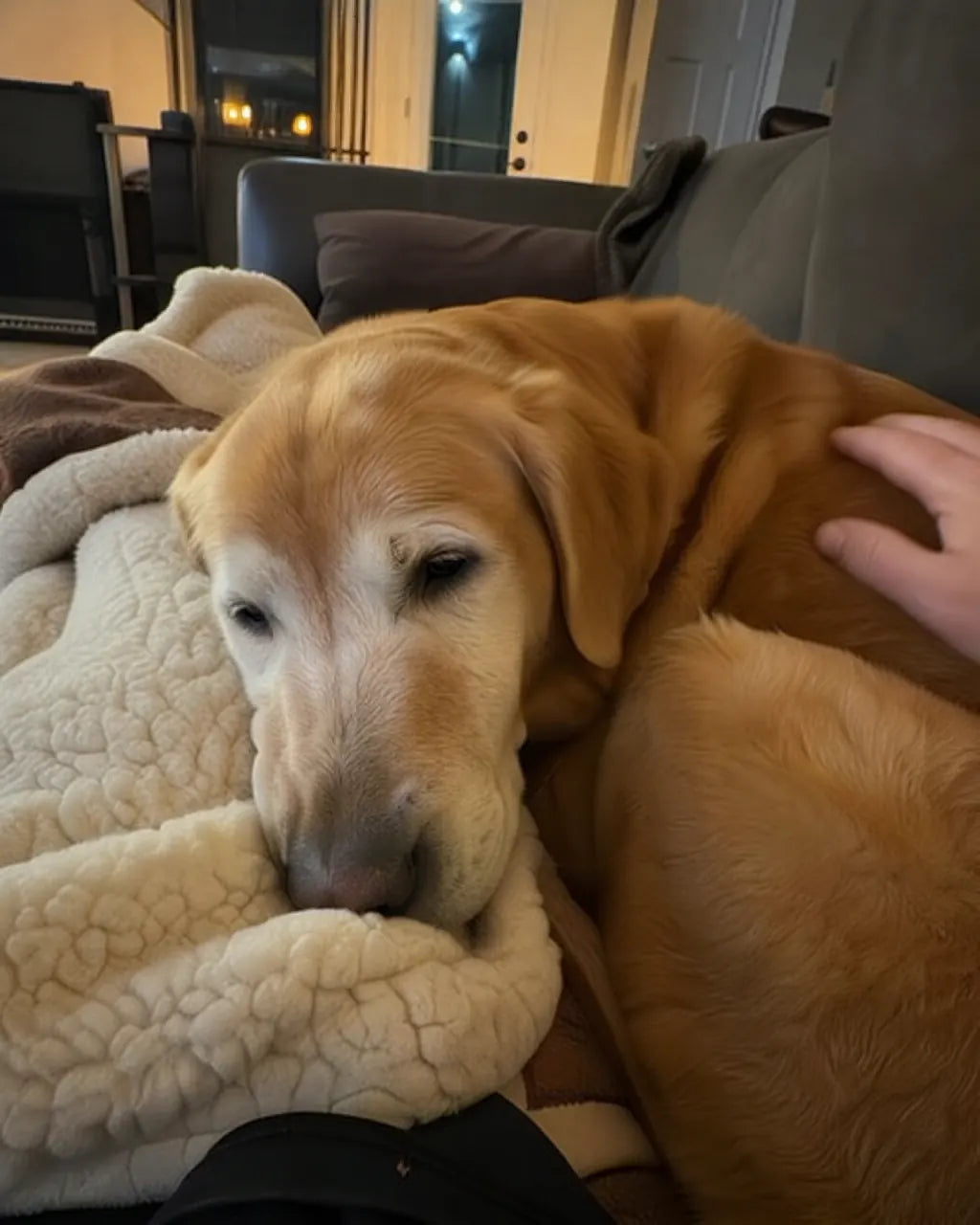
When slow-rise becomes "call the vet"
- Won't bear weight on a leg for more than a day
- Crying when she stands
- Sudden change (was fine, now is not)
- Loss of bladder control
Daily chew is the routine. Vet is the diagnosis.
What we use: TROT, daily joint chew. Built for the dog who has done a lot of mornings. See the formula →