
Daily Routine for Long Back Breeds: Doxies, Corgis, Frenchies
Doxies. Corgis. Frenchies. The breeds you fall in love with for the body shape, then spend the rest of their lives ramp-proofing the house for.
This is the daily routine long-back owners actually run.
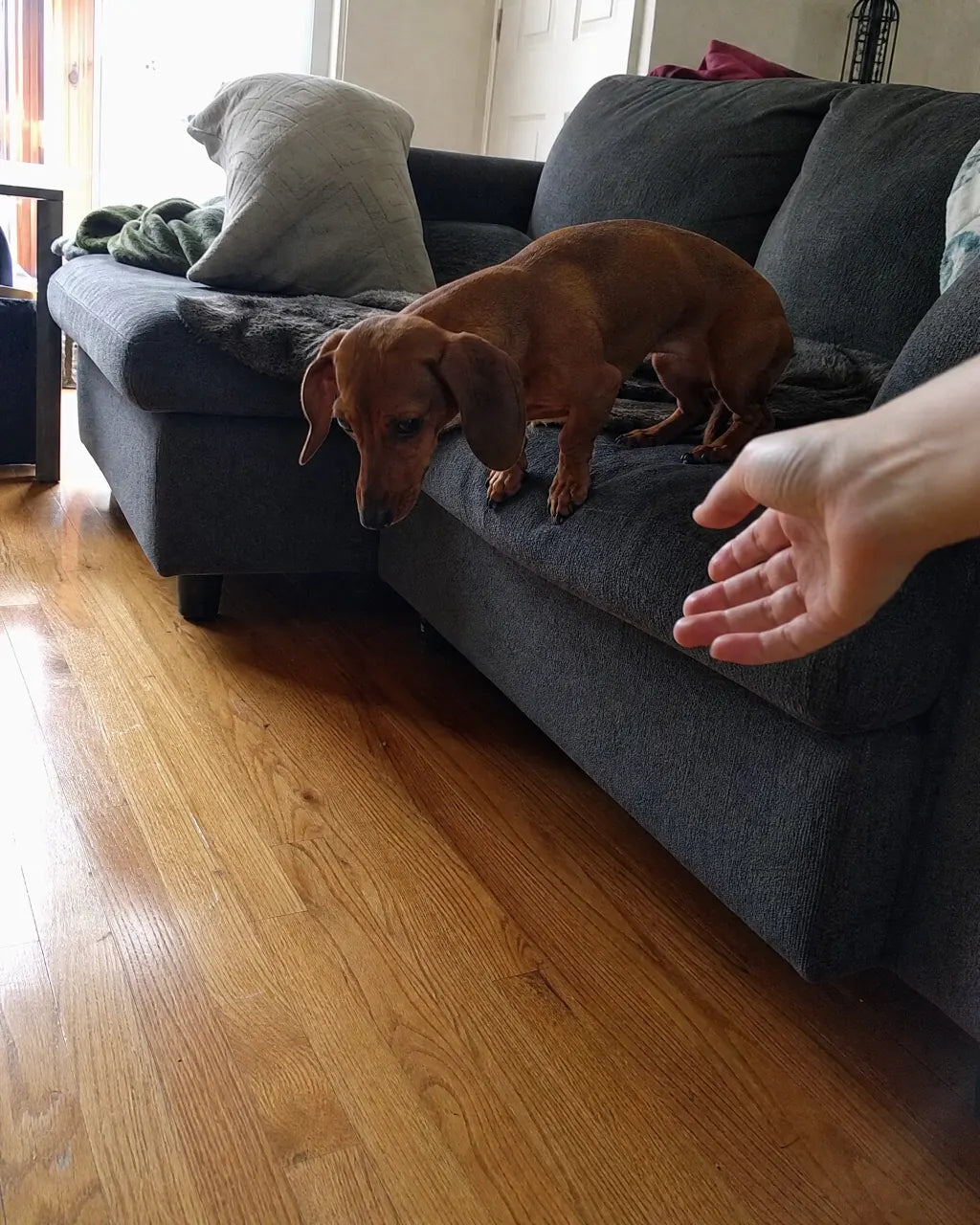
What "long back" actually means for daily movement
A Dachshund's spine carries about 4x the leverage of a Lab's spine relative to body weight. A Corgi's spine sits 5x lower to the ground than a Golden's. A Frenchie's hindquarters drag more weight per stride than a same-weight terrier.
The body math is simple: more leverage, more compression, more daily wear on every joint and disc. The owner math is what changes — every jump becomes a calculation.
Ramps over stairs, harness over collar
The two upgrades long-back owners say they wish they'd done sooner:
- Couch ramp + bed ramp. Anywhere they jump down from regularly. The first 6 weeks of training-them-to-use-the-ramp is annoying. The next 10 years are easier.
- Y-front harness, not a collar. Collar pull on a long neck/long body = pressure on every cervical disc.
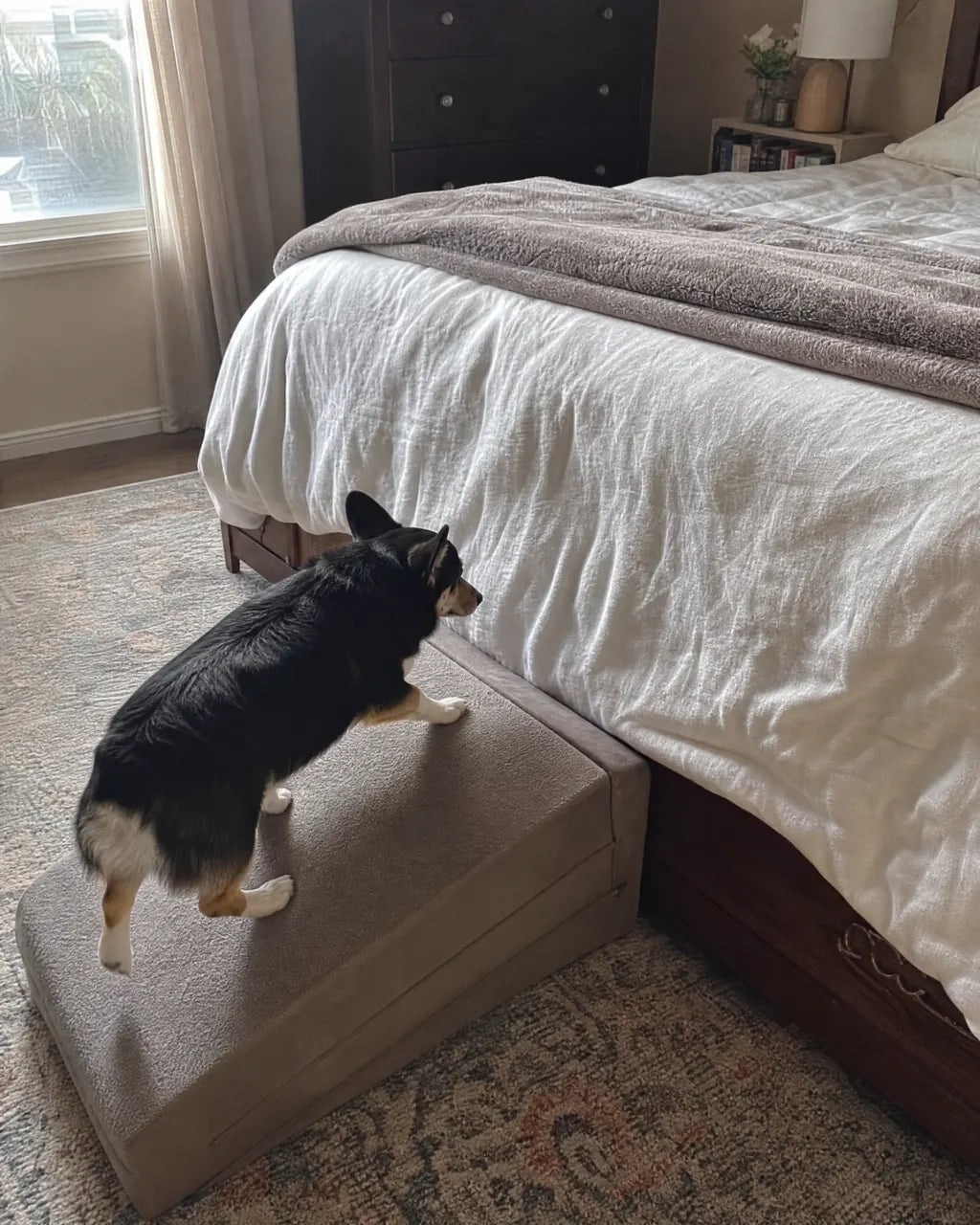
The no-jump rule and how to enforce it
Easier said than run. The rule: no couches, no beds, no kitchen counters, no car seats — without help. The enforcement: pick them up before they jump. Every single time. For years.
Long-back owners describe the slow shift in their own body — they unconsciously hold their dog at the curb, at the couch arm, at the stair lip. That body memory is the moat.
Daily chew + the supplement stack
Owners report the supplements they actually keep on the counter:
- Daily joint chew (six actives — covers most of what owners stack separately)
- Salmon oil (separate)
- Sometimes: laser therapy on flare days
- Vet-prescribed if there's a history
TROT covers glucosamine, chondroitin, MSM, hyaluronic acid, turmeric, passion flower in one chew. Two minutes a morning. Same shelf as the coffee.
Red flags to text the vet about
- One yelp on a jump or twist — text the vet that day
- Hind-leg wobble or paralysis (any duration) — emergency
- Refusing to come up the ramp they normally take — slow down
- Hunched back or stiff neck on top of any of the above
The daily routine is not a substitute for the diagnosis. It is the part you get to do.
What we use: TROT, daily joint chew. See the formula →