
They Used to Fly Up. Now They Wait.
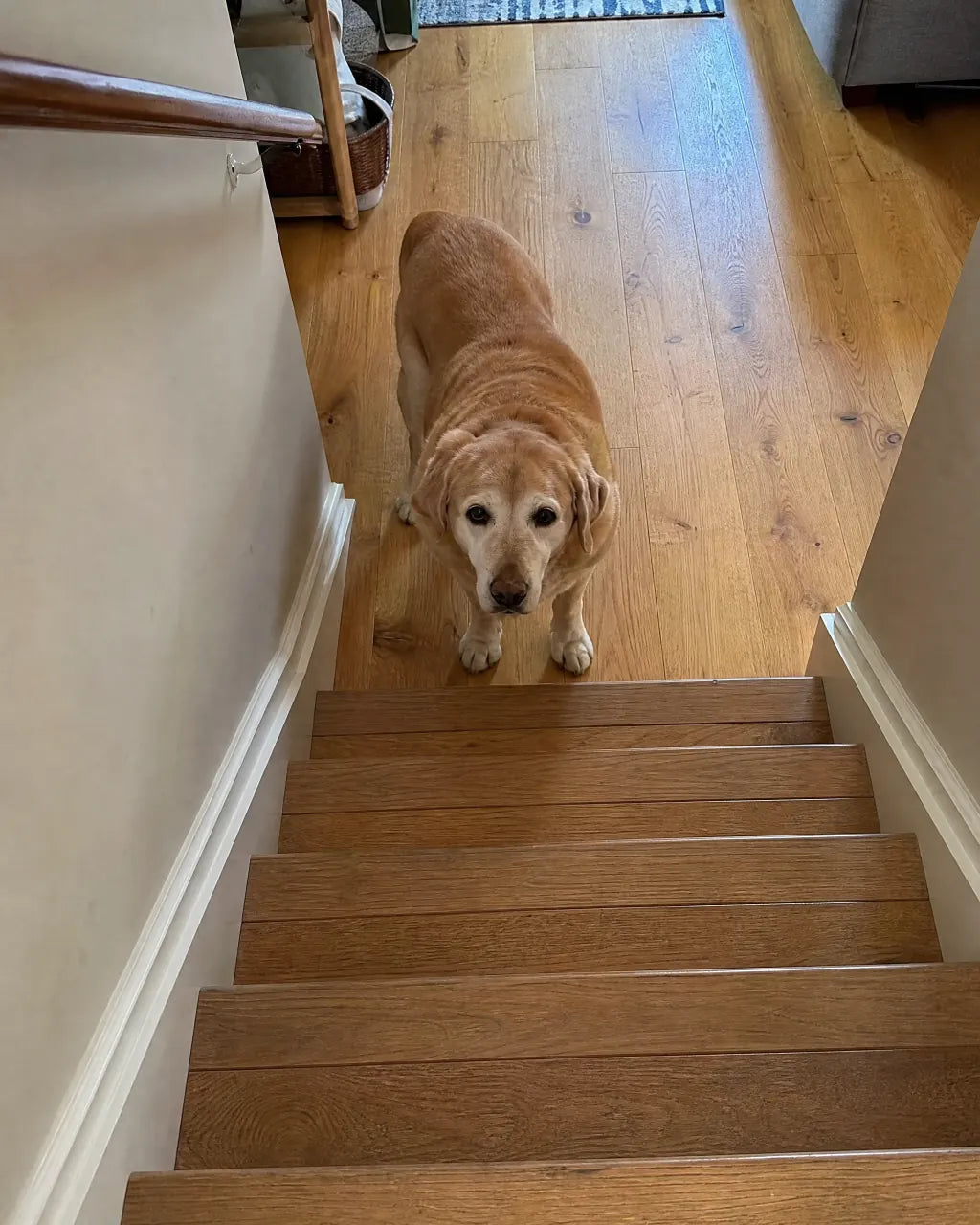
They used to fly up the stairs. Now they wait at the bottom.
This is the loudest signal owners under-react to.
Why "will not jump" is louder than it sounds
Jumping is the body's most demanding everyday move. It loads every joint at once on takeoff and again on landing. A dog that decides not to jump is doing a cost-benefit calculation on their own body.
That calculation is more reliable than an x-ray for catching daily-life joint discomfort early. By the time they stop jumping, the body has been telling you for weeks.
The body math on a single jump
A 60-pound Lab jumping off a 24-inch couch lands with ~3-4x body weight (180-240 lbs of force) compressing through the front shoulders and front knees in a quarter-second. Repeated 8-10x daily, that is meaningful daily loading even on healthy joints.
For a senior dog or a tripawd or a long-back breed, the same math is louder.
The low-cost home audit
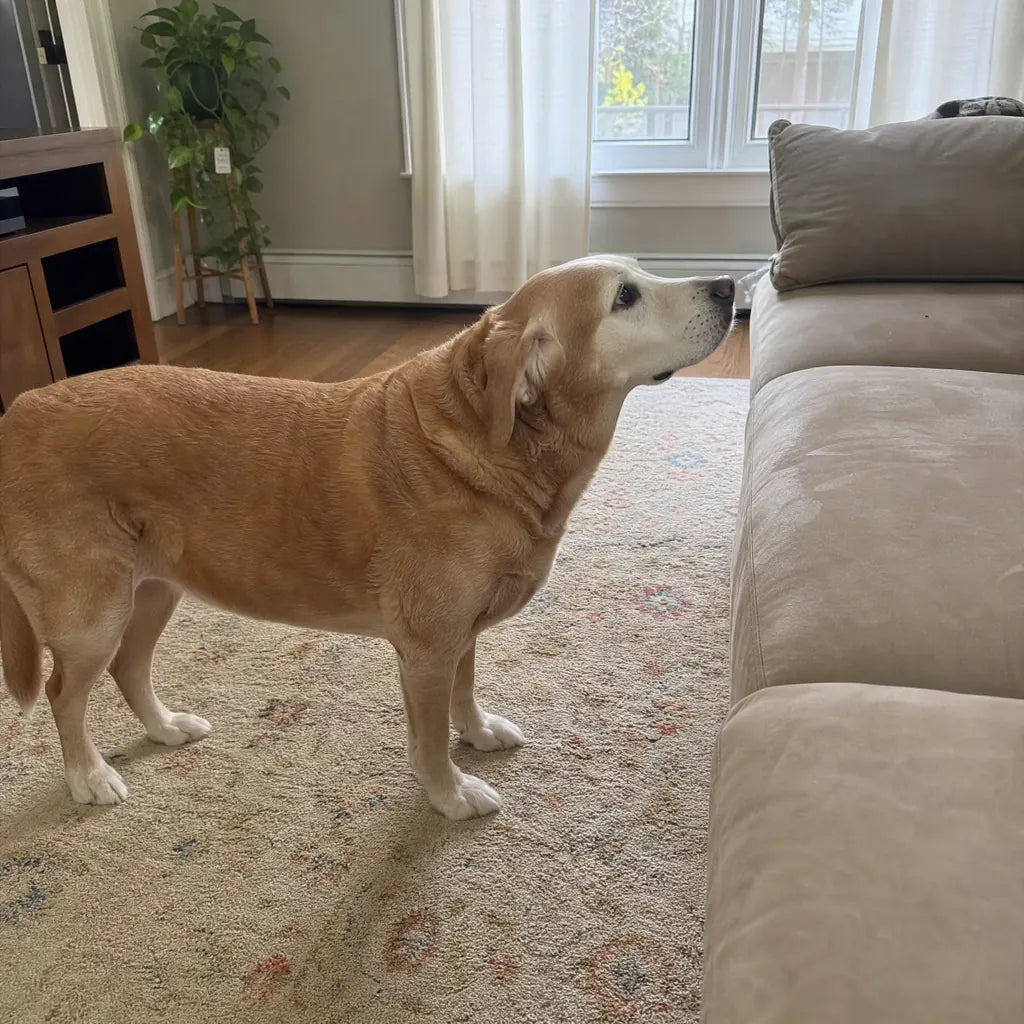
- Ramps on every furniture piece they regularly jump down from. Soft incline, not stairs.
- Runners on hardwood between the bed, the water bowl, and the door. The path they walk daily.
- Toe Grips on nails for tile and vinyl traction.
- Orthopedic bed with edge support. Memory foam, not a puff.
- Lift assist for car/SUV trunks. Don't let them jump the tailgate.
Total cost of all 5: under $250. Paid back in joint life-years.
Daily chew as part of the routine
The daily chew supports the joints doing the work. It is part of the routine, not the fix. The fix is: ramps, runners, lift assist, weight management, daily walk, the chew. All five. Every day.
When to skip the supplement and call the vet today
- Sudden refusal to bear weight on a leg
- Crying when they stand up
- Unexplained limp lasting more than 24 hours
- Lethargy + refusal to eat
Not "wait and see" days. Vet days.
What we use: TROT, daily joint chew. See the formula →